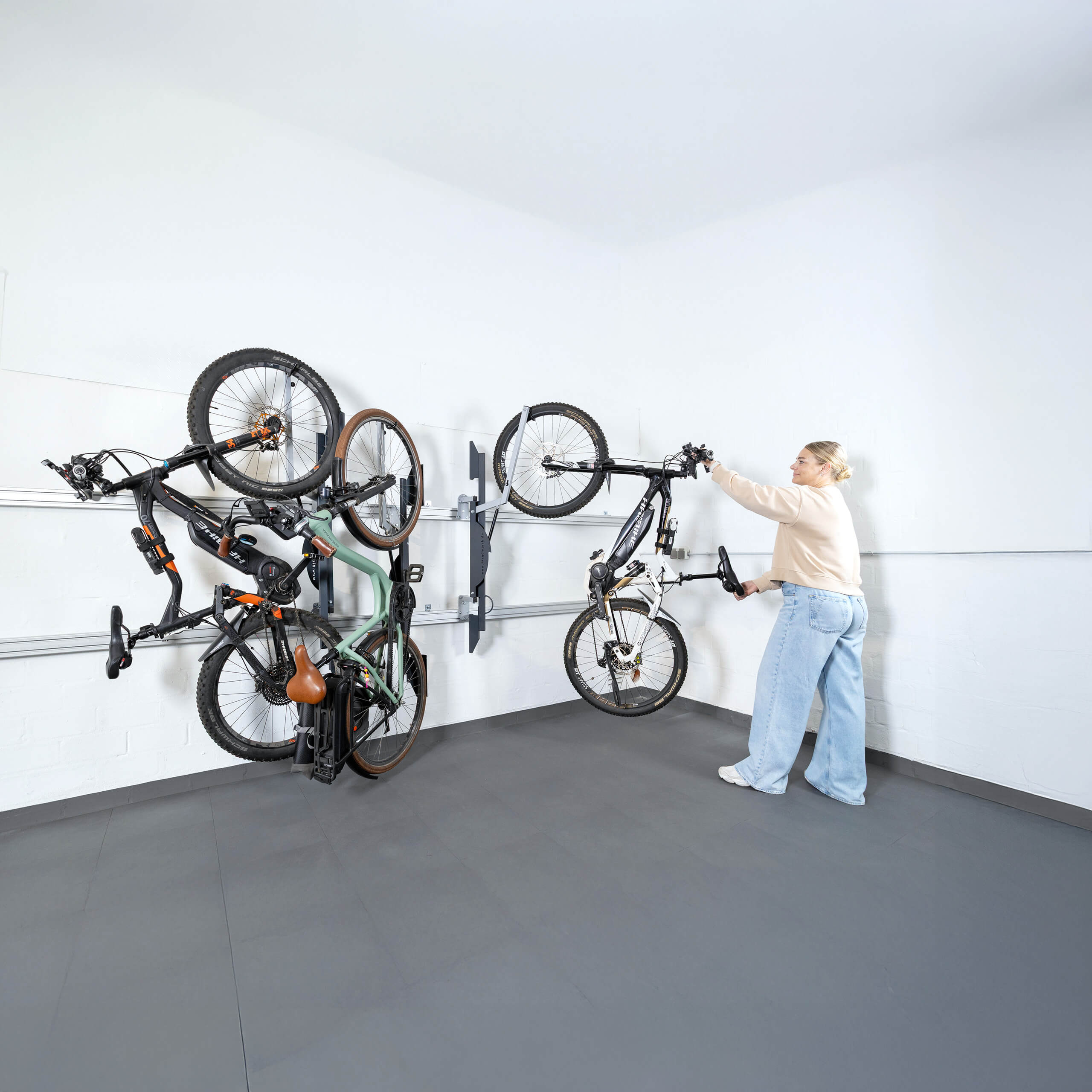
Bike Lift: Store your bike on the wall to save space
In many garages, bicycles simply get in the way: up to two square meters of floor space per bike—space that could otherwise be used for a car, shelves, or garden tools. A bike lift solves this problem by utilizing vertical space, making it possible to lift even e-bikes weighing up to 30 kg with one hand by raising them to the wall using a gas spring or an electric motor. A thickly rubberized hook secures the front wheel, while the built-in power unit supports the weight. This way, you reclaim floor space in your garage or basement. Which model suits your situation depends on three factors: your physical condition, your budget, and whether a 230-V power outlet is available.

Classic wall mount or electric: Which bike lift is right for you?
The wall-mounted bike lift is a classic: a rubberized hook grips the front wheel, and a gas spring provides the lifting force. This makes 30 kg feel like just 5 kg.
The electric model is worth it if you move heavy bikes on a daily basis: 230 V motor, safety brake, and a load capacity of up to 50 kg. Those who store multiple bikes in a workshop or commercial garage will benefit the most from this model.
Load capacity, effort required, assembly: What really matters when buying
The Most Important Points at a Glance
- →Load capacity: Standard and e-bikes up to 31 kg with the BicycleJack Basic and the BicycleJack Twist, up to 38 kg with the BicycleJack Twist (including MagFix), and up to 50 kg with the electric BicycleJack Power
- →Effort required: Gas spring assists with lifting (traditional lift suitable for anyone who can exert a brief burst of force); electric lift operates regardless of the user’s strength
- →Ceiling height: If your bike is shorter than the ceiling height, it will fit with the BicycleJack. However, you should allow for a few centimeters of clearance at the top and bottom.
- →Substrate: Concrete and stone are not an issue; target wooden beams specifically; drywall is unsuitable
- →Paint protection: rubber-coated hooks prevent scratches on the front wheel rim
When making a purchase, the bike’s weight is the most important factor. A standard touring bike weighs 14 to 18 kg, a city e-bike weighs 24 to 28 kg, and an e-MTB weighs 25 to 30 kg. The BicycleJack Basic or BicycleJack Twist can handle a total weight of up to 31 kg. For heavier bikes or for added safety, simply add the MagFix to the BicycleJack Twist, or opt for the BicycleJack Power (up to 50 kg) to be on the safe side. In our shop, you can easily select the right model based on your bike’s parking weight.
Experience shows that many buyers underestimate the weight of their e-bike because they don’t include the battery in their calculation, but a 250-Wh battery often adds 2 to 3 kg. So weigh the bike exactly as it will be parked at the BicycleJack, with all its accessories included.
How the gas spring mechanism works in a bike lift
Key Metrics at a Glance
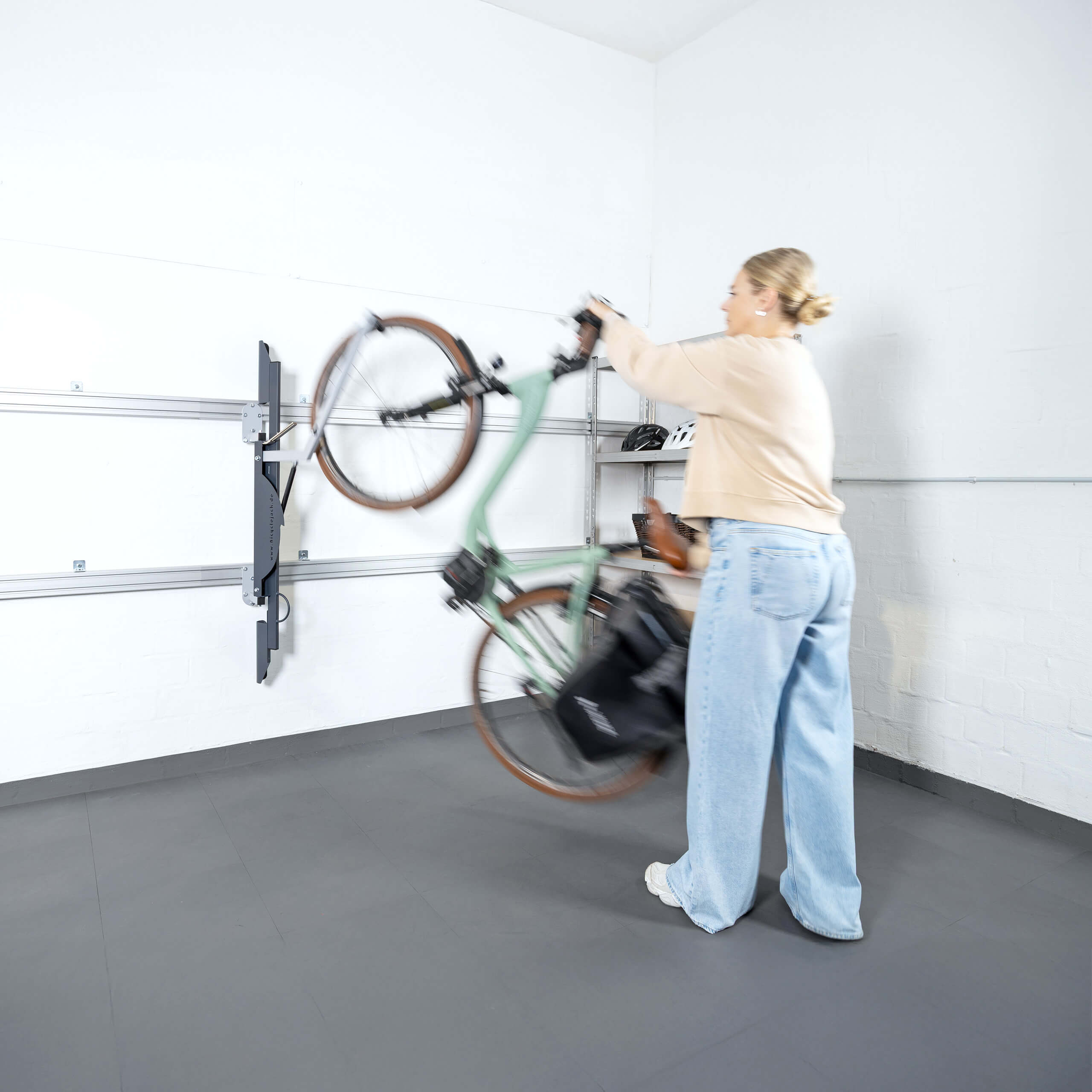
Ceiling height is the second factor. If your bike fits upright in the room, it will work with any BicycleJack bike lift. If your ceiling is low, it’s always a good idea to check the height with a folding ruler beforehand.
Another crucial factor during installation is the surface. Concrete and stone walls can easily support the lift’s weight; using the optional anchor and screw sets, the lift can be quickly secured in about 30 minutes. For walls with wooden beams, you should ensure that the lift is mounted on a load-bearing beam to guarantee a secure installation. However, installation in drywall without a supporting structure behind it is not possible.